
The Bloom Room: Why Floral Programming Has Become the Most Quietly Transformative Amenity in Luxury Senior Living
The most sophisticated wellness amenities in luxury senior living are not the ones that announce themselves loudest. They are the ones woven quietly into the fabric of daily life — present every morning, every afternoon, every season. A bloom room, designed with intention, is exactly that.
There is a language that flowers have always spoken to those willing to listen. The tight-furled bud of a garden rose on a bedside table. The particular green smell of fresh-cut stems in water. The way a well-composed arrangement changes the quality of light in a room, warming it, anchoring it, making it unmistakably alive. These are not decorative observations. They are sensory facts — and the science behind them is increasingly compelling.
For the most discerning families navigating a senior living transition, the question of floral programming is rarely asked. It should be among the first. A thoughtfully designed bloom room — or a community-wide floral programming practice — is one of the few amenities that operates simultaneously at the level of beauty, neuroscience, social engagement, and deeply personal identity. It is, in a word, exceptional value.
At Saar Advisory, we have watched floral programming evolve from an afterthought — a weekly delivery of generic arrangements to the lobby — into one of the most intentional and resident-centered offerings in the luxury senior living landscape. What follows is both an appreciation of what the best communities have built and a guide for families considering how to replicate this standard in a private aging-in-place residence.
The Science Beneath the Petals
The therapeutic literature on flowers and human wellbeing is older and more robust than most people realize. Research from Rutgers University established that exposure to flowers produces immediate positive emotional responses and longer-term reductions in depression and anxiety in older adults — effects that persisted days after the initial exposure. The mechanism is not mysterious: flowers engage the limbic system directly, triggering the same neural pathways associated with reward, memory, and emotional regulation.
For residents living with early to moderate cognitive decline, the evidence is particularly compelling. A six-month dementia-friendly garden intervention study published in peer-reviewed literature documented a significant reduction in depression scores among participants — notably including those with more advanced dementia, a population previously assumed to derive limited benefit from non-pharmacological interventions. The stimulation was multimodal: visual, tactile, olfactory, motor. Flowers, in other words, do not require the resident to meet them intellectually. They reach the body first.
"Flowers do not require the resident to meet them intellectually. They reach the body first — through scent, color, texture, and the particular pleasure of living things in a room."
The American Horticultural Therapy Association has documented additional benefits with particular relevance to senior residents: improved social interaction — floral arrangements serve as natural conversation starters between residents, family visitors, and staff — and enhanced engagement with the immediate environment. A resident who has lost interest in their surroundings will often re-engage when something in the room is growing, changing, requiring gentle attention.
What the science confirms, in the end, is what anyone who has ever kept a garden already knows intuitively: flowers make a room feel inhabited. They make a life feel continuous.
What a Bloom Room Actually Is
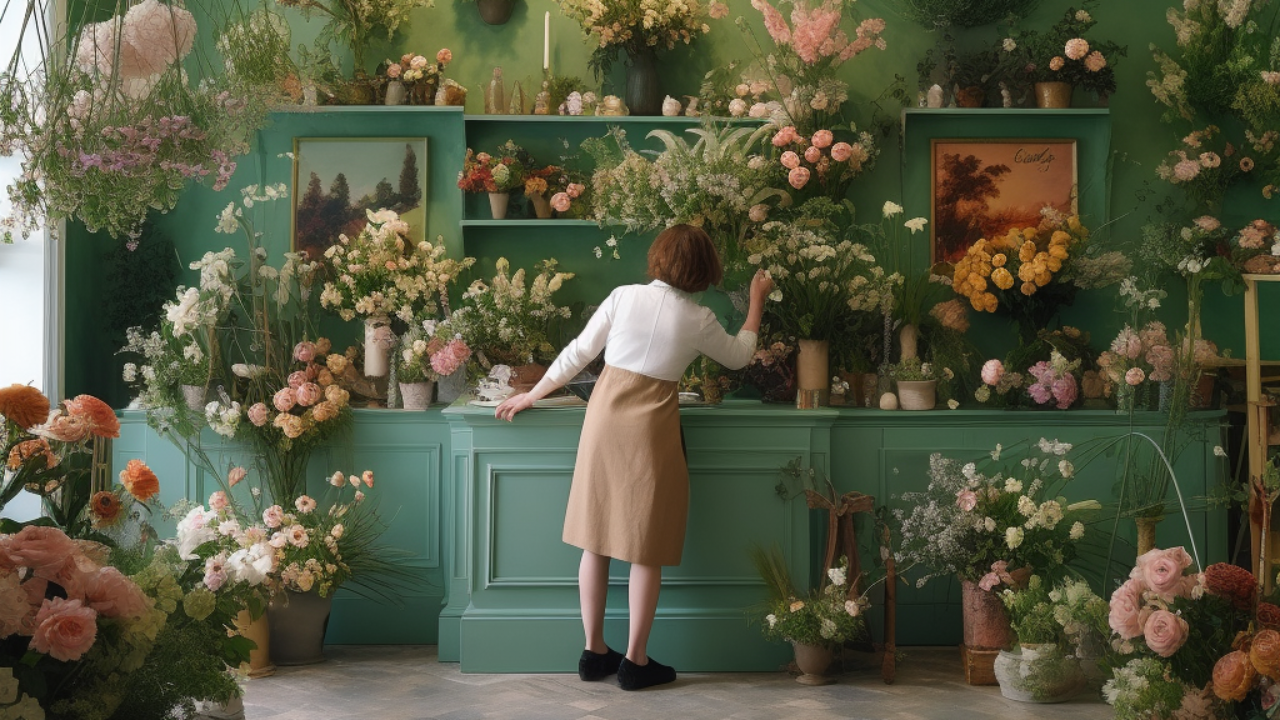
The term has become something of a shorthand in luxury hospitality and residential design — and its meaning varies significantly depending on context. At its most modest, a bloom room is simply a dedicated space within a residence or community where fresh flowers are received, conditioned, arranged, and distributed. At its most considered, it is something closer to a private floral atelier: a room designed for the practice of arrangement as a daily ritual, stocked with seasonal stems from a curated supplier, outfitted with proper worktables, lighting, and water sources, and integrated into the resident's day the way a kitchen garden integrates into the life of a home.
For luxury senior communities, the bloom room occupies a specific niche between wellness amenity and lifestyle programming. The finest iterations share several characteristics:
Sourcing
Seasonal, curated supply
A genuine bloom room is supplied by a florist relationship — not a wholesaler. Stems arrive weekly or bi-weekly, selected for seasonal relevance and arranged with the same curatorial sensibility applied to a kitchen's ingredient sourcing.
Programming
Resident participation
The most sophisticated programs invite residents into the act of arrangement — guided sessions with a floral designer, open studio hours, or private instruction for those who maintained their own gardens or cut flowers at home.
Integration
Throughout the residence
Arrangements move from the bloom room into the resident's private suite, common dining areas, and entry spaces — creating a cohesive sensory environment rather than a single focal point. The effect is cumulative and deeply felt.
Design
The room itself
Natural light. A deep sink with proper drainage. Worktable at accessible height. Cool storage for conditioned stems. Simple, beautiful surfaces that make the act of arranging a pleasure rather than a task. The room should feel like the most inviting workspace in the building.
Designing for Aging in Place: The Private Bloom Room
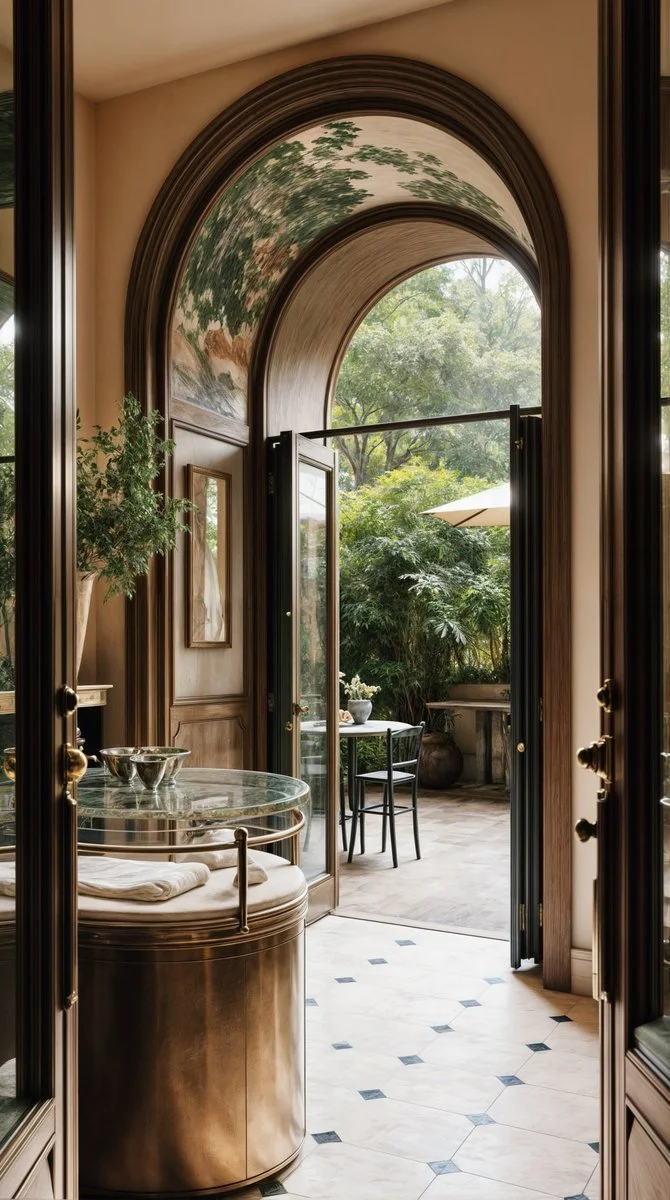
For clients remaining in their primary residences — whether in a private home or a luxury aging-in-place setting — the bloom room concept translates directly into residential design. It is, at its core, a version of what certain European country houses have always had: a dedicated flower room adjacent to the kitchen or garden entrance, where the day's cutting is brought in, stripped, conditioned, and composed before being carried into the rooms of the house.
In a contemporary luxury residence designed for aging in place, this space merits deliberate design consideration. The details that matter are both practical and aesthetic. A deep, stone or porcelain sink — the kind that accommodates tall stems without compromise. Counter height calibrated to the resident's comfortable working posture, whether standing or seated. Adequate cold storage for cut flowers, which extends their life by days. Generous natural light from a north-facing window, which provides consistent illumination without the heat that shortens the life of fresh flowers.
On accessibility
A bloom room designed for aging in place should account for the possibility of changed mobility without announcing it. Knee clearance beneath the worktable, lever-style fixtures, non-slip flooring that reads as design rather than accommodation, and adequate turning radius — these are the details that allow the space to continue serving its resident across decades, not merely seasons. The standard, throughout, is a room that is beautiful first and accessible always.
The biophilic design literature is unambiguous on this point: the presence of living plants and flowers within a private residence is associated with measurably reduced stress markers, improved sleep quality, and enhanced mood — effects that compound over time rather than diminish. A bloom room is not an indulgence. In the context of a thoughtfully designed aging-in-place environment, it is infrastructure.
The Floral Identity of a Residence
Every gardener, every devoted host, every person who has cared about their home has a floral sensibility — a grammar of stem and bloom that is as specific to them as their taste in furniture or their preference in wine. Garden roses rather than hothouse roses. Branches of quince in early spring. The particular combination of dahlias and sweet peas that made the cutting garden in a former home the best room in the house.
This sensibility does not retire. It relocates.
One of the most meaningful services Saar Advisory can facilitate in a senior living transition is the documentation and continuation of a resident's floral identity in their new space. This means conversations — with the resident, with family members who have observed a lifetime of choices — about what flowers have always mattered, what seasonal rhythms have marked the year, what the table looked like at important dinners. It means establishing a relationship with a florist who understands that the brief is personal, not generic.
The result is a private suite that smells and looks like home — not because it has been decorated to approximate a home, but because the flowers on the table are the same flowers that have always been on the table. That specificity is not a small thing. For a resident navigating the disorientation of a new environment, it is, in fact, one of the most stabilizing forces available.
What to Ask When Evaluating a Community's Floral Program
For families in the process of evaluating luxury senior living communities, floral programming is a lens through which a great deal becomes visible. A community that has invested thoughtfully in this dimension — that has a dedicated space, a real florist relationship, resident programming, and seasonal intentionality — is almost certainly attending to the other dimensions of daily life with the same care.
The questions worth asking directly: Are arrangements composed in-house or delivered pre-arranged? Is there a bloom room or dedicated floral workspace accessible to residents? Does the community have an ongoing relationship with a specific florist or floral designer, or is sourcing managed through a generic hospitality supplier? Are residents invited to participate in the arrangement process, and if so, how is that programming structured? Does the floral program extend into private suites, or is it limited to common areas?
A community that answers these questions with specificity and confidence has thought about what it means to make a place feel genuinely alive. That is the standard Saar Advisory holds — and the standard every resident of a luxury community deserves.
The Room That Is Always in Season
There is a reason that the finest hotels in the world — the Ritz in Paris, Claridge's in London, the Aman properties — make their floral programs a matter of institutional identity. Flowers communicate care without a word. They signal that the people responsible for this space have considered not merely its function but its feeling — the quality of the air, the texture of the light, the particular pleasure of walking into a room where something is alive and beautiful and chosen with thought.
A luxury senior residence that has earned that same standard — in its bloom room, in its private suites, in the cut stems on the dining table at every meal — has understood something essential about what it means to grow older with grace. It is not about softening the edges of loss. It is about sustaining, with complete seriousness, the pleasures that have always made life worth living.
Flowers have always been among them. They still are.
Saar Advisory evaluates the full spectrum of wellness amenities — including floral programming, biophilic design, and the personal details that define genuine quality of life — as part of every senior living placement and aging-in-place consultation. To speak with Michelle Saar, contact us for a confidential conversation.